Define the job window and noise tolerance
Power needs hinge on continuous vs. intermittent loads. Long overnight work at industrial sites or high-bay maintenance often calls for extended runtime planning and sound-attenuated enclosures if work neighbors offices or residential blocks. Daytime riverfront work may allow different noise expectations, but changing wind and weather along the water can affect light distribution and fuel consumption.
Ground and access in a Mississippi River city
River-bottom loam and clay in Davenport can stay soft after rain or snowmelt. For outdoor placements, note surface stability where the generator or light tower will sit. Document whether a unit can remain on a compacted pad or must travel across uneven ground from the drop point. For indoor staging in distribution buildings, verify door clearances, turning room, and ventilation restrictions that may steer you toward electric power distribution from an outdoor generator rather than indoor combustion.
Power planning for mixed industrial loads
- List start-up vs. running amperage for motor-driven tools or pumps.
- Account for HVAC, lighting, and any battery charging cycles that spike demand in local warehouses.
- Consider voltage and phase compatibility with existing panels to avoid unnecessary step equipment.
A modest margin for weather and startup surges helps prevent nuisance trips when humidity and temperature shift.
Light coverage in tall and wide spaces
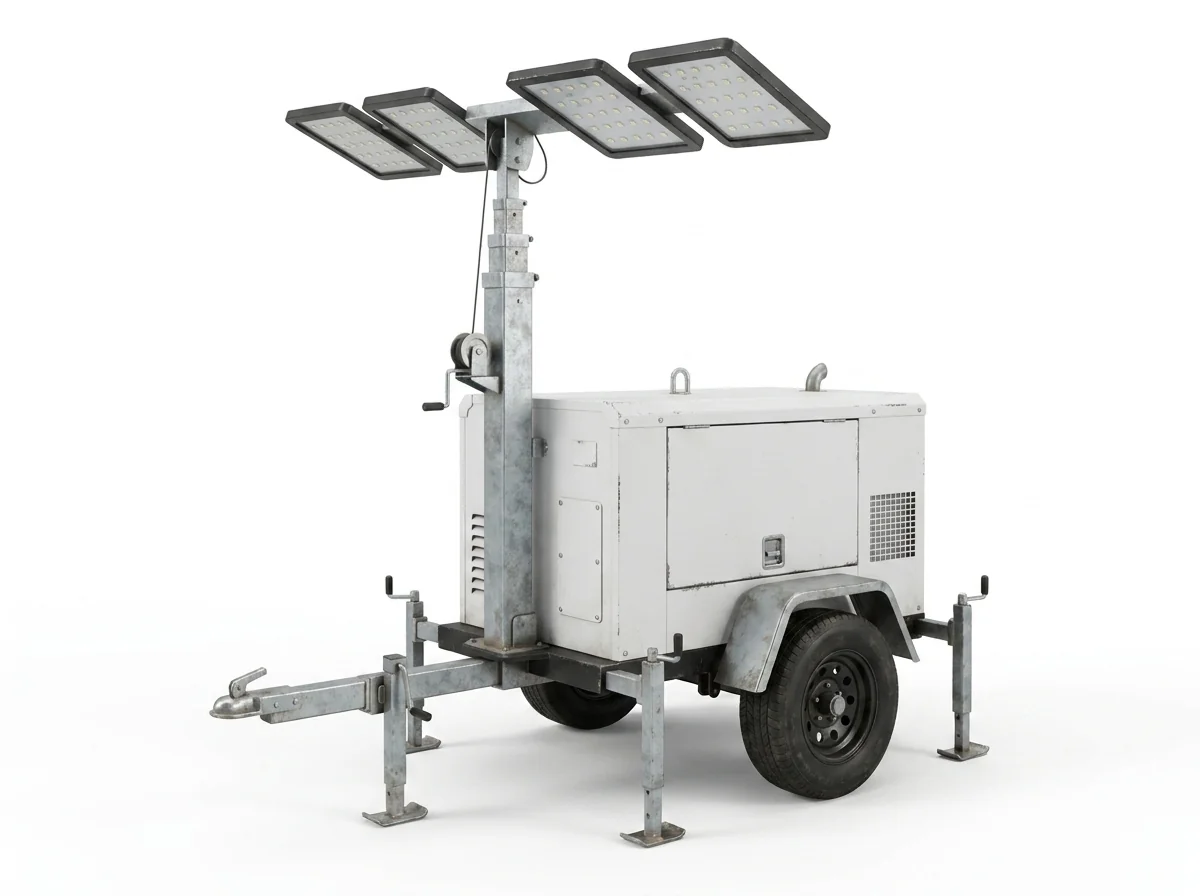
High-density racking and tall ceilings in Davenport logistics buildings require precise mast height and head count to cut shadows between aisles. Outdoors, frequent haze and river moisture can diffuse light; wider beam patterns and more heads may be needed to keep staging, access roads, and work faces uniformly lit.
Transport and placement route
Measure curb-to-pad distance from the delivery point, dock height changes, and any slope near levee work or parking lots. Tight turns inside loading corridors can limit trailer position and dictate compact towers. Note cable routing so foot traffic, forklifts, or aerial lifts have clear lanes.
Related lift access
If lights or power feeds must be placed overhead, cross-check aerial access needs: - For smooth slab interiors: see /electric-scissor-lift-rental/ - For uneven exterior surfaces: see /rough-terrain-scissor-lift-rental/ - For outreach around obstacles: see /articulating-boom-lift-rental/ and /telescopic-boom-lift-rental/
Coordination in changing weather
The regional climate swings from humid summers to freezing winters. Fuel type, cold-start needs, and condensation management matter. Plan service clearances around the unit so refueling, cable checks, and aiming adjustments can happen without blocking material flow.