Surface and site-stability planning conditions
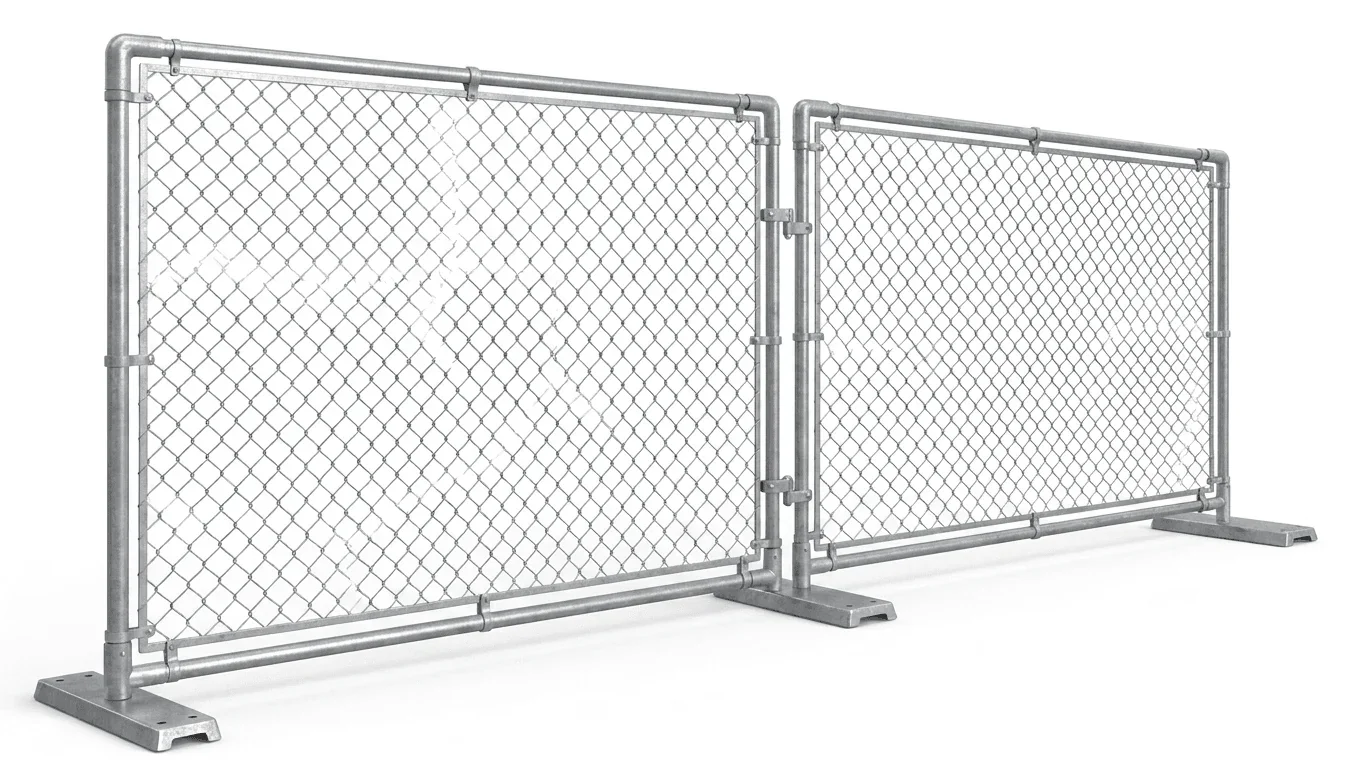
River-bottom soils and clay slopes can shift after rain. Where ground is soft or uneven, freestanding panels with appropriate site-stability factors may perform better than driven posts. On paved yards, panel feet and weighted bases reduce damage to slabs while maintaining lane widths for material handling equipment.
Traffic separation in busy logistics areas
- Define clear forklift corridors to prevent conflicts with pedestrians.
- Use barricades to mark temporary pinch points near dock aprons and staging pads.
- Plan gate widths and swing paths so deliveries and aerial lifts can pass without moving panels during normal operations.
Weather and water proximity
Along Davenport’s waterfront and low-lying zones, changing conditions can alter footing. Allow for drainage paths and avoid trapping water against structures. Wind exposure near open lots may require closer panel spacing and careful site-stability factors planning according to product guidance and site procedures.
Visibility and wayfinding
High-bay interiors and night work in yards benefit from reflective barricades and coordinated light placement. Sightlines for truck drivers and equipment operators should remain open at turns and intersections. Where multiple trades work side by side, color-coding or clear signage reduces confusion.
Integrating with elevated work
If overhead work occurs inside the perimeter, confirm equipment paths for scissor lifts or booms so barricades don’t box out necessary approach angles: - Smooth slab interior access: /electric-scissor-lift-rental/ - Uneven exterior approaches: /rough-terrain-scissor-lift-rental/ - Outreach over obstacles: /articulating-boom-lift-rental/ and /telescopic-boom-lift-rental/
Actual conditions, the selected unit’s instructions, and site procedures govern exterior and elevated work.