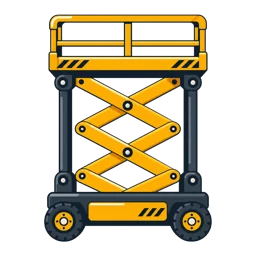
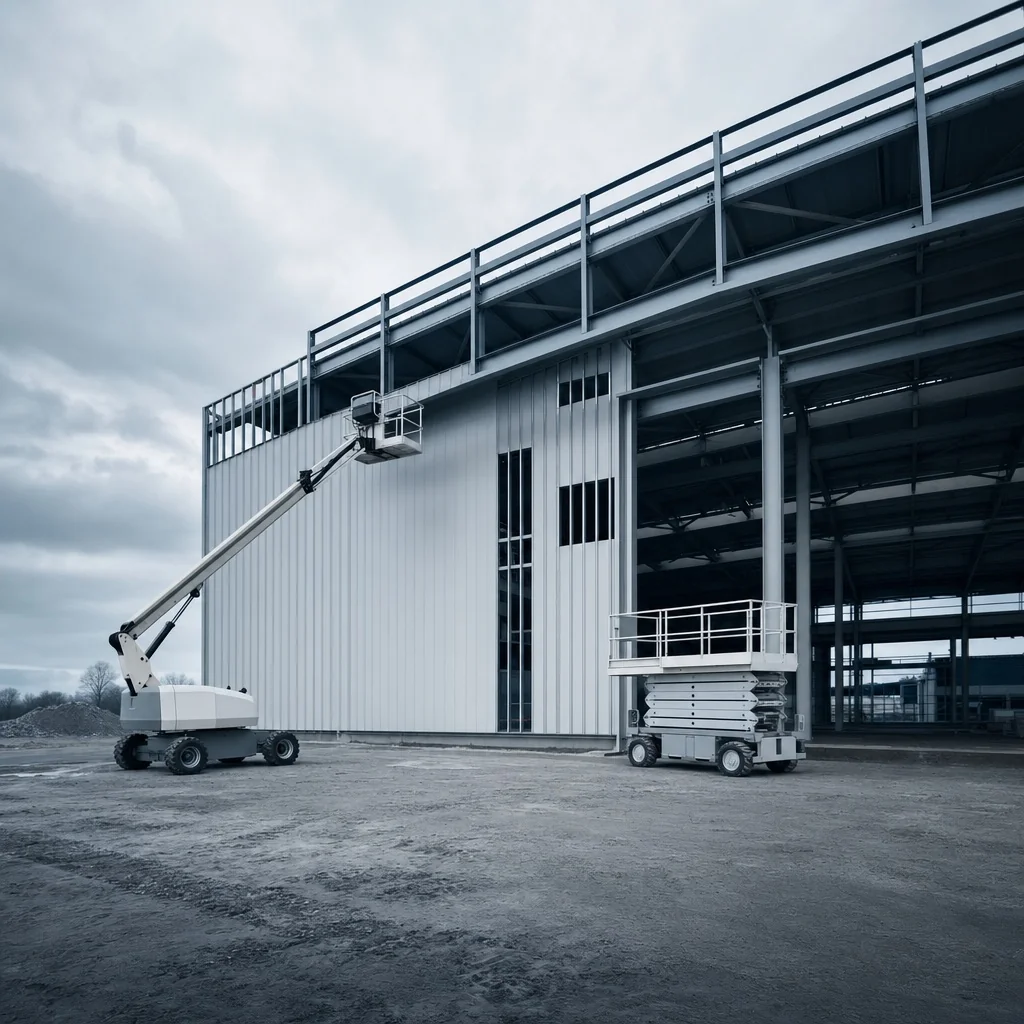
Scissor lifts for vertical work on slabs vs. mixed ground
- Electric scissor lifts: Best matched to smooth interior slabs where the machine can sit directly below the task with minimal outreach. See /electric-scissor-lift-rental/.
- Rough-terrain scissor lifts: Fit exterior tasks on uneven lots, compacted pads, or near riverfront projects where ground firmness varies. See /rough-terrain-scissor-lift-rental/.
Key checks: platform height needed, platform capacity for tools and parts, and aisle width between racking common in local distribution buildings.
Boom lifts for reach and obstacles
- Articulating booms: Navigate around conveyors, mezzanines, and façade elements when the machine cannot sit directly below the task. See /articulating-boom-lift-rental/.
- Telescopic booms: Serve straight-line, long-reach tasks on open pads or waterfront structures with clear approaches. See /telescopic-boom-lift-rental/ and /boom-lift-rental/.
Ground slope, surface condition, and wind exposure along open yards guide the comparison. Actual conditions, the selected unit’s instructions, and site procedures govern elevated work.
Material handling around docks and yards
- Forklifts: Tight indoor aisles and dock interfaces demand accurate mast height and turning radius planning. See /forklift-rental/.
- Telehandlers: Favor outdoor picks and placement over uneven surfaces or when staging containers and materials near infrastructure work. See /telehandler-rental/.
Site products that support the lift plan
- Generators and light towers: Power and visibility for night or extended shifts, especially in high-bay interiors and river-adjacent work zones. See /generators-light-towers-rental/.
- Storage containers: Secure, weather-aware staging for parts and tools near docks or on compacted yards. See /storage-containers-rental/.
- Temporary fencing and barricades: Define lanes and perimeters without blocking lift approach angles. See /temporary-fencing-barricades-rental/.
Route and staging details that change outcomes
Map the delivery path: curb access, dock heights, interior door clearances, and any soft ground near the water. In humid summers and freeze-thaw seasons, confirm bearing strength and drainage around the machine’s footprint. For high-bay work in local warehouses, check racking spacing and overhead obstructions before locking in platform size or boom geometry.